
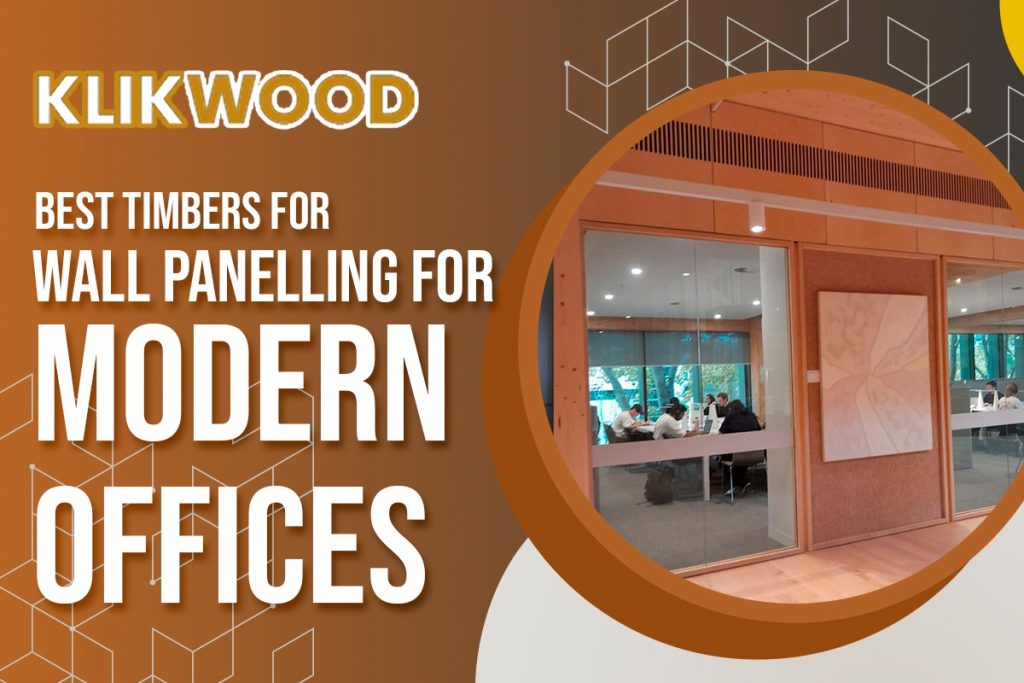
Timber wall panelling helps to regulate sound, separate rooms, and improve the look of the office fit-out. However, the responsibility of balancing aesthetics and functionality lies with the materials. Thus, choosing the correct timber for your wall panelling is paramount. The right material will help your office achieve durability, sustainability, and boost employee productivity. For this, a varied range of timbers is available to achieve the goal for your office.
American Oak
American oak is synonymous with durability, strength and sophistication. The premium timber has a yellow hue, lending elegance to its surroundings. American oak is one of the strongest timbers in the market. One of the most significant advantages is that this material is versatile. Consequently, it can be used for a variety of interior applications. The most common reason this is chosen for wall panelling is due to acoustic management qualities. Additionally, it is an effective material for thermal insulation.
Blackbutt
Blackbutt is known for its unique pattern and texture, which adds to its vicinity. Timber wall panelling with blackbutt appears grainy with a wide colour pattern. From cream coloured traditional office settings to brown colours in bamboo offices, blackbutt can be used in every environment. This timber’s grainy character adds warmth to the layout. Additionally, its tough exterior prevents damage and ensures longevity. Its versatility in design makes it suitable for both rustic and modern interior design.
Burnt Ash
Burnt ash has a deeply charred appearance on its exterior. This look adds a dramatic visual to the space and a bold aesthetic design. Thus, this makes one of the most distinctive timber panels in the market. Apart from effective thermal and acoustic insulation, the design is compatible with industrial-themed layouts. Consequently, this is one of the most popular choices for wall panelling in most commercial buildings. The char makes it more resistant than other materials, simultaneously adding depth and gravitas to the room.
Ironbark
Ironbark is celebrated for its unparalleled density and hardness. This robust timber promises durability, reliability and versatility. The ironbark is available in a variety of colours and textures, which are suitable for all interior designs. It’s pale yellow and dark red, which offer sophistication. Meanwhile, its grainy texture provides warmth and is suited for rustic-themed offices. Its wide range of colour schemes makes it the top choice of timber wall panelling.
Jarrah
Jarrah is one of the very few timbers that radiates warmth and luxury. The material is resistant to decay and damage. Consequently, it is compatible with commercial spaces and high-traffic areas. Jarrah consists of rich hues, adding layers of sophistication and a welcoming tone. This improves visual appeal and enriches the mind. Jarrah partitions have been correlated with the freshness of office environments and improving employee morale. The timber’s high density ensures durability and longevity. Its appearance can be customised with proper finishing.
Tasmanian Oak
Tasmanian oak is one of Australia’s iconic timbers. The material is sourced from a native-grown Eucalyptus tree. Versatile with a coarse texture, Tasmanian oak is renowned for its durability and varied applications. It is easy to install and customisable, making it easy for panelling and partitioning. The oaks’ bright hues add elegance to the environment and are suitable for professional environments. Its customisable nature makes it the perfect choice for timber wall panelling. Another advantage of Tasmanian oak is its cost-effectiveness due to its durability.
Spotted Gum
Another Australian native timber, spotted gum, is well-regarded in commercial space design. Its natural durability, acoustic control, and elegance improve the appearance of any space. Moreover, spotted gum is renowned for its intricate grainy design. Its native roots make it a favourite among companies with sustainability goals. Thus, this material is frequently used with bamboo offices to strengthen the structure of the workspace. Spotted gum is resistant to termites, hence durability is also one of its main features. Additionally, it is partially fire-resistant and can act as a safety measure. Therefore, this wood makes it one of the contenders for timber wall panelling.
Types of Right Timber Wall Panelling Profile
Proplank System
The Proplank system is a timber wall panelling system where the panels are attached with a click-together mechanism. In this system, the timber battens are attached to mounting rails with clips. This allows the designers and workers to customise the wall panels to your preference. The proplank system allows the designer to have full control over spacing and finishes for acoustic control. Moreover, it helps with improving the aesthetic appeal of the space.
Trendplank Profile
The trendplank profile makes the panelling look smooth and clean. Thus, this system is used in exterior walls and ceilings. This system hides its fasteners underneath its battens. Consequently, you can exploit its ability for full movement and the versatility of the timber. The Trendplank profile is used for walls with curvatures or with odd-shaped walls. Furthermore, this system is used during the tongue and groove technique for waterproofing.
Satinplank Panels
The most versatile timber wall panelling profile is the satinplank panels. Designed to bring character and warmth to the vicinity, satinplank panels are used for bespoke projects. The designers use multiple installation techniques, such as secret fix or face fix, to position their clippings. Santinplan panels enable multiple timber options like American Oak, Jarrah, Tasmanian Oak, and Spotted Gum.
Conclusion
Materials are an indispensable component for determining the success of timber wall panelling. Timber materials such as American Oak can elevate your space with its sophisticated hues. Meanwhile, Tasmanian Oak can provide durability and cost-saving installation. They all come in diverse colours and designs that you can customise. Combining material with the correct timber profiling will yield the maximum results. While Trendplank panels focus on clean appearance, Santinplank remains the most versatile. Using the timbers mentioned above to install using the profile method improved durability, design, and functionality. However, balancing these two aspects can be overwhelming. Here’s where Klikwood comes in. Klikwood provides the best homegrown Australian timber with full-fledged customisation options. Visit our official website to contact us and get a free quotation.
FAQs
What is timber wall panelling and where is it commonly used?
Timber wall panelling is a wall-cladding system used for thermal and acoustic controls. This panelling system is used in hospitality and other commercial spaces. Timber wall panelling adds texture, colour, and warmth.
Which timber species are best for wall panelling?
The design intent and space layout determine your timber materials for wall panelling. American Oak, Tasmanian Oak, and Spotted gum are the common materials for maintaining functionality and aesthetics.
Is timber wall panelling suitable for offices and commercial spaces?
Yes, timber wall panelling is suitable for both offices and other commercial spaces. They offer better noise management and thermal comfort. It is versatile enough to fulfil sustainability goals, especially for bamboo offices.